Generative AI and the Future of Software Development
Forrester’s 2026 Outlook — Where Data Becomes the New Code
Generative AI is redefining how software is built, but the real transformation is not about smarter tools. It’s about data, analytics maturity, and governance becoming the foundation of engineering itself.
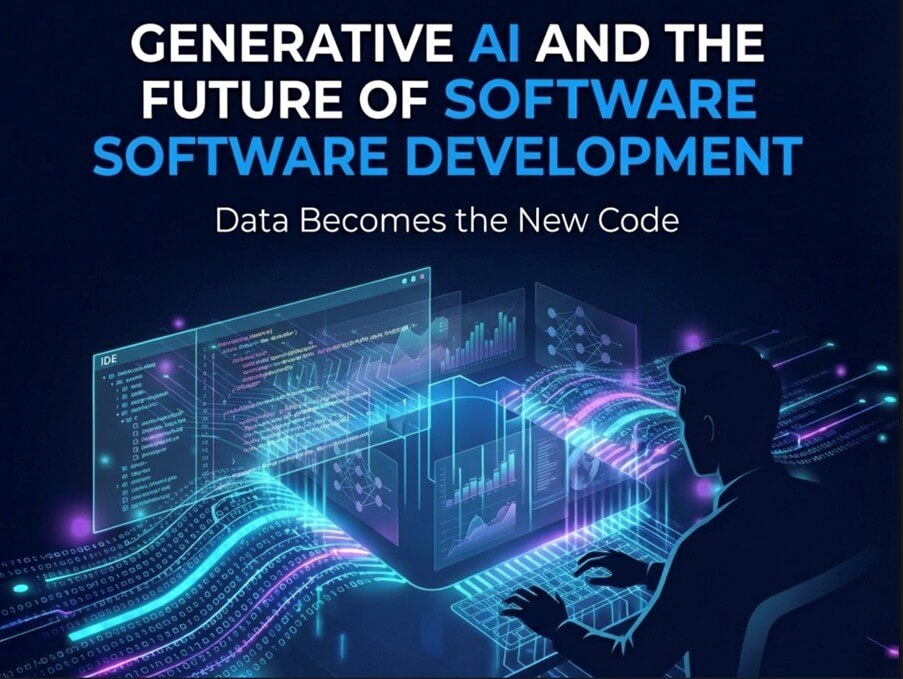
Where Data Becomes the New Code
Generative AI is reshaping software development—but fundamentally, this transformation is driven by data and analytics, not just smarter developer tools. According to Forrester’s Predictions 2026: Software Development, organizations that succeed with GenAI-led engineering will be those that treat data platforms, analytics maturity, and governance as strategic foundations.
Software Development Becomes a Data-First AI Use Case
Forrester predicts that software development will become the largest and most valuable enterprise use case for AI. However, the effectiveness of GenAI depends directly on the quality, accessibility, and context of enterprise data.
Modern engineering teams will increasingly rely on unified data platforms across cloud, hybrid, and on-prem environments, enriched by feature stores, metadata layers, real-time analytics, and secure lineage. Developers will focus on defining intent and outcomes, while GenAI—powered by analytics platforms—converts those inputs into performant, compliant, and scalable software systems.
From Vibe Coding to Data-Driven Engineering
The industry is evolving beyond prompt-based vibe coding toward data-driven vibe engineering. GenAI systems now leverage historical codebases, production telemetry, performance metrics, and user behavior data to guide engineering decisions.
This shift enables AI-assisted architecture design, automated testing informed by real usage patterns, predictive performance analysis, and continuous optimization through analytics feedback loops. Software development becomes a closed-loop system, continuously learning from data.
Talent Shifts Toward Analytics-Aware Engineers
Forrester also predicts a significant talent shift. Demand will grow for engineers who understand data platforms, AI pipelines, and analytics-driven decision-making. Future-ready teams will need professionals capable of interpreting model outputs, guiding AI with domain context, designing data-intelligent architectures, and ensuring responsible and secure AI usage.
This trend accelerates the rise of analytics engineers, AI platform engineers, and data-savvy architects.
AI ROI Requires Analytics Discipline
As GenAI investments scale, organizations are demanding clearer ROI. Forrester anticipates a reset where AI success is measured by business impact, trust, and governance, not just speed. Strong data and analytics practices—KPI-driven measurement, cost analytics, model monitoring, and value tracking across the SDLC—become essential.
Looking Ahead
Two trends will define the next phase: analytics-as-code, embedding metrics and governance directly into pipelines, and data-platform-led AI governance, using metadata, lineage, and policy enforcement to scale AI responsibly.
The future of software development is data-powered, AI-orchestrated, and analytics-governed.
Forrester Predictions 2026: Software Development
The full Forrester report “Predictions 2026: Software Development” outlines how generative AI will reshape software development by placing data, analytics, and governance at the strategic core of engineering.
For full insights and predictions, read the original report on Forrester’s site: View Forrester Predictions 2026 →